A ladybird resting on a blue flax flower at the Caucasus Wildlife Refuge, Armenia.
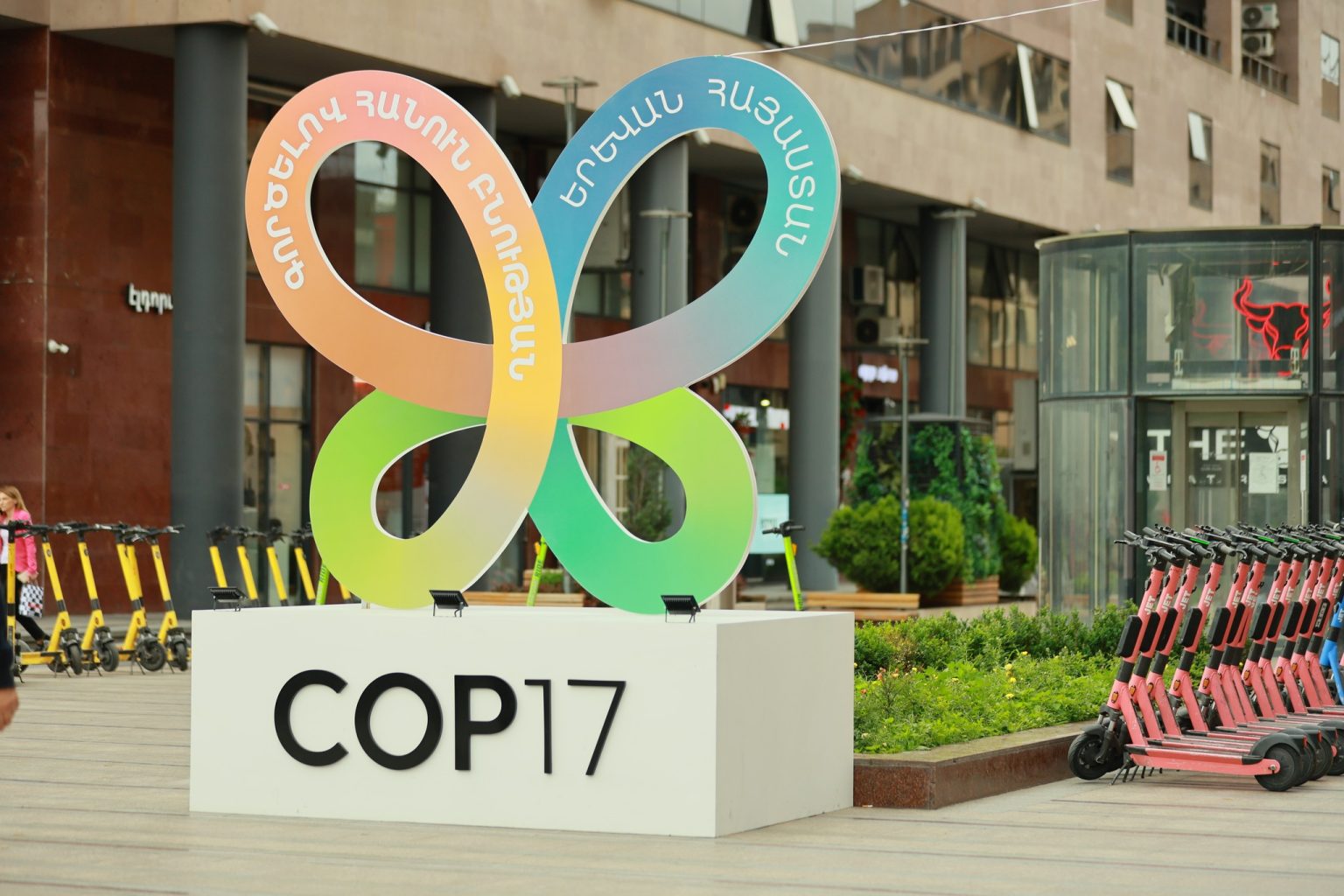
COP17 Β· YEREVAN, ARMENIA

Yerevan Conservation Symposium 2026

Beyond State Protected Areas

πŸ“… 17–18 October 2026 Β· Yerevan, Armenia

Convened by FPWC immediately ahead of CBD COP17, this symposium brings together governments, civil society, indigenous leaders, and conservation institutions to address the governance gap at the heart of the Kunming-Montreal Global Biodiversity Framework β€” and to produce a shared call to action.

ABOUT THE SYMPOSIUM

Closing the governance gap

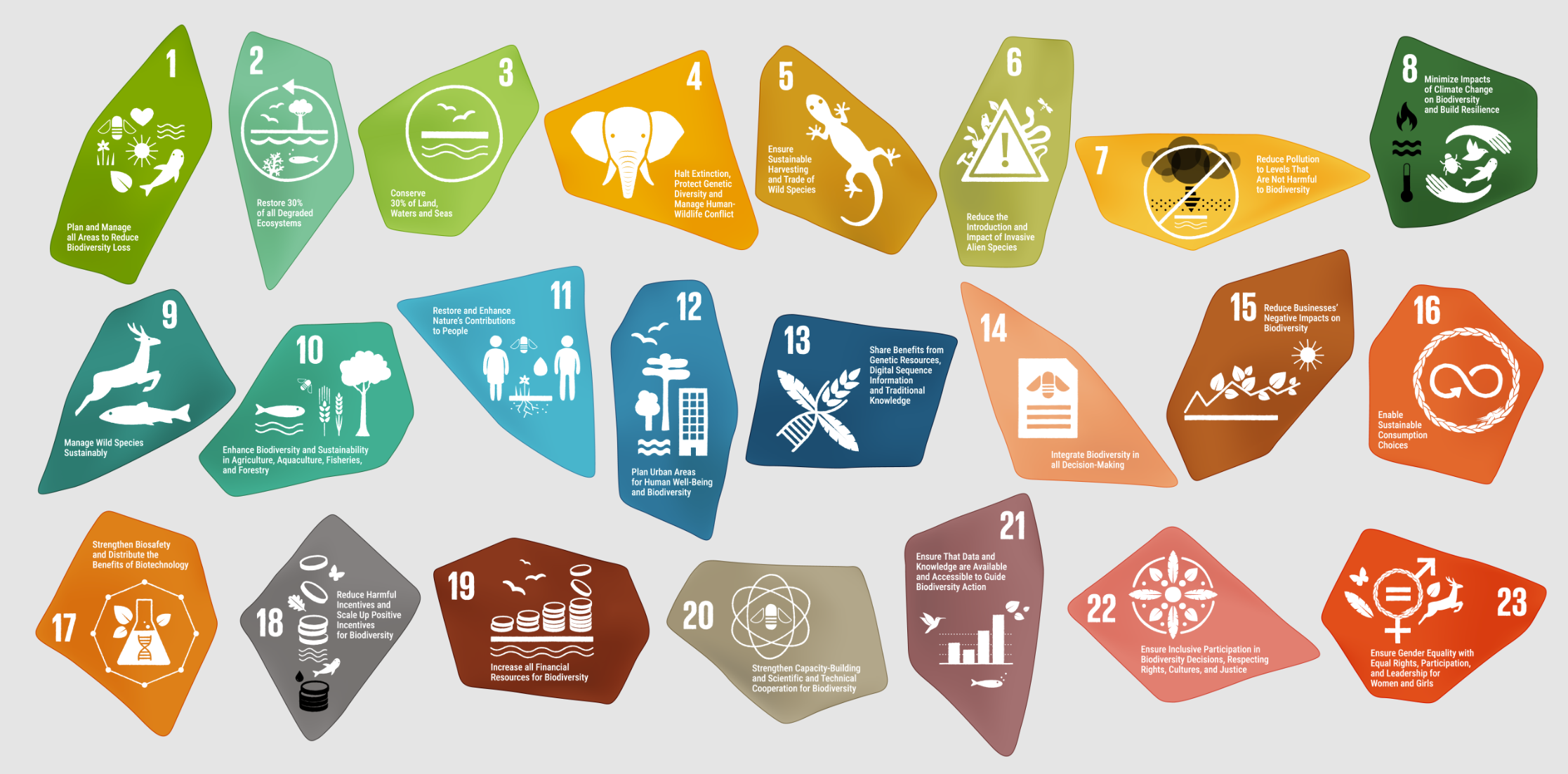
The Kunming-Montreal Global Biodiversity Framework's Target 3 commits the world to protecting 30% of terrestrial, inland water, and coastal and marine areas by 2030. Yet the frameworks needed to recognise and finance non-state conservation β€” Other Effective Area-based Conservation Measures (OECMs), Privately Protected Areas (PPAs), and Indigenous and Community Conserved Areas (ICCAs) β€” remain absent or underdeveloped in most national legislation.

This symposium convenes the senior experts, policymakers, and practitioners needed to change that. Its central output is the Yerevan Call to Action: a formally adopted policy instrument that will be tabled at COP17, calling on Parties to establish legal and financial frameworks for non-state conservation governance.

Armenia β€” host of CBD COP17 and home to the Caucasus Wildlife Refuge, one of the South Caucasus's most significant privately protected areas β€” provides both the political moment and a living case study for what non-state conservation governance can achieve.

The Symposium will:

  • Advance recognition of OECMs in national 30Γ—30 targets
  • Bridge state and non-state conservation governance frameworks
  • Launch the Yerevan Call to Action ahead of COP17 negotiations
THE YEREVAN CALL TO ACTION

A policy instrument for CBD COP17

The Yerevan Call to Action is the Symposium's principal output β€” a formally negotiated policy instrument produced through two days of working group deliberation, adopted by consensus, and collectively signed by participants before being tabled at COP17.

What it calls for

Legal definitions and recognition procedures for OECMs, PPAs, and ICCAs in national legislation Β· Outcome-based eligibility criteria compatible with international reporting standards Β· Finance mechanisms that reach non-state actors managing effective conservation areas Β· Community and indigenous rights embedded in β€” not subordinated to β€” governance frameworks

How the Call to Action is produced

  1. 1Working Group drafts text through monthly meetings, June–September 2026
  2. 2All 200 Symposium participants engage with the draft across both days, 17–18 October
  3. 3Final text adopted by consensus in the Day 2 plenary session
  4. 4Armenia's COP17 delegation formally tables the signed instrument at COP17 opening plenary

The working draft is in preparation and will be released in late August 2026. Leave your details below and we will notify you the moment it is available for comment.

Symposium Programme β€” Full Agenda

Session schedule, speakers, working group structure Β· Available September 2026

PROGRAMME AT A GLANCE

How the two days are structured

The detailed agenda β€” exact timings, speakers, and room assignments β€” will be published as a downloadable PDF in September 2026. In the meantime, here is the indicative structure the Working Group is planning around.

⚠ Draft structure β€” subject to change
Day 1 Β· 17 October

From Global Ambition to National Implementation

Introduction and Framing
Opening Keynote: Target 3 after the First KMGBF Stocktake – Where Are We Now?
High-Level Panel: Delivering 30x30 Through Diversified Governance
Stream 1: Legal and Institutional Frameworks
Information session: Legal Recognition of Protected Areas, OECMs and PPAs: Lessons from Early Adopters
Technical session: Comparative National Approaches to Recognition of Non- State Conservation
Facilitation World CafΓ©: Designing National Recognition Pathways
Day 2 Β· 18 October

Building an Enabling Environment

High-Level Panel: Communities, Rights and Conservation Governance
Information session: Indigenous & Community Governance: Recognition Without Losing Autonomy
Stream 2: Indigenous & Community-Governed Areas
Technical session: Community Governance Case Studies (ICCAs, PPAs, customary governance, community conserved areas)
Stream 3: Outcome-Based Eligibility and Monitoring
Technical Session: Monitoring Biodiversity Outcomes: What Counts as an OECM?
Information session: National Reporting systems - e.g., WDPA
Stream 4: Conservation Finance & Incentive Design
High Level Panel: Financing Non-State Conservation at Scale
Information session: Financing Conservation Beyond Protected Areas – What's Available Today?
World CafΓ©: What Should the Yerevan Call to Action Include?
Final Session
Presentation of Working Group Recommendations

This structure reflects the Working Group's current planning as of June 2026 and is provided for orientation purposes only. Session order, timing, and content may change before the final programme is published.

SPEAKERS & MODERATORS

Who will be in the room

Speaker and moderator cards are updated as confirmations are received. Full programme available once the agenda is published.

Speakers

Name Surname

Title / Role β€” to be confirmed

Organisation β€” to be confirmed

Name Surname

Title / Role β€” to be confirmed

Organisation β€” to be confirmed

Name Surname

Title / Role β€” to be confirmed

Organisation β€” to be confirmed

Name Surname

Title / Role β€” to be confirmed

Organisation β€” to be confirmed

Name Surname

Title / Role β€” to be confirmed

Organisation β€” to be confirmed

Name Surname

Title / Role β€” to be confirmed

Organisation β€” to be confirmed

Moderators

Name Surname

Moderator β€” to be confirmed

Organisation β€” to be confirmed

Name Surname

Moderator β€” to be confirmed

Organisation β€” to be confirmed

Name Surname

Moderator β€” to be confirmed

Organisation β€” to be confirmed

PROGRAMME THEMES

Four working group streams

The Symposium works in four parallel streams across both days. Click any stream to learn more about its scope, questions, and expected outputs.

WG-A

Legal & institutional frameworks

Scope

Examines recognition procedures, registry standards, and eligibility criteria for OECMs and Privately Protected Areas (PPAs) in national legislation. Draws on comparative legal analysis from countries that have enacted enabling frameworks, and from those that have not. Understanding how legal systems, including policies, laws and regulations can enable the specific recognition of these protected and conserved areas.

Key questions

  • –What legal definition should an OECM carry in national law?
  • –How should recognition procedures work β€” who decides, and on what criteria?
  • –What institutional home should non-state conservation governance have within government?
  • –How are new legal categories created?
  • –What legal definition and recognition pathway should apply to Privately Protected Areas (PPAs)?
  • –What legal definition and recognition pathway should apply to community-conserved areas more broadly?
  • –What kinds of capacity are required to incorporate provisions into laws and regulations that enable the recognition and support of conserved areas, and indeed to maintain the effectiveness of their governance and management arrangements?

Expected output

Empowers knowledge users with confidence that recognition of Target 3 contributions can be achievable through OECM/PA designation and formal recognition. This stream will be delivered through panel discussions and information sessions.

More information

Detailed session agenda, background papers, and rapporteur details will be published here once the programme is finalised in September 2026.

WG-B

Indigenous & Community-Governed Areas

Scope

Areas governed by Indigenous Peoples and Local Communities (IPLCs) are among the most ecologically effective conservation areas globally, yet most national frameworks fail to recognise them β€” whether that governance is formalised as an ICCA, falls under community-based conservation, or has no current legal category at all. Examines land tenure, community rights, and how formal recognition β€” under ICCA or other pathways β€” can support, rather than undermine, community autonomy.

Key questions

  • –How can state recognition of IPLC-governed areas avoid co-opting or constraining community governance?
  • –What kinds of processes are needed to map and identify areas that would meet the definition of OECMs and ICCAs more generally?
  • –What processes are needed to engage with the custodians and stewards of these areas to encourage them to include their areas in national systems, with fear of a breakdown of their existing governance and management regimes?
  • –Where ICCA is the chosen recognition pathway, what land tenure protections are necessary to make that recognition durable?
  • –How should indigenous peoples' organisations participate in governance design?
  • –Should a national framework recognize IPLC governed areas as a distinct legal category, or treat it as one route into OECM/PPA status β€” and what does each choice imply for community autonomy?

Expected output

Development of Principles for rights-compatible recognition of indigenous and community governance, including safeguards and community consent mechanisms (FPIC and similar) applicable to IPLC governance pathways, for inclusion in the Yerevan Call to Action. This stream will be delivered through panel discussions, workshop/participant discussion, and case studies.

More information

Detailed session agenda, background papers, and rapporteur details will be published here once the programme is finalised in September 2026.

WG-C

Outcome-based eligibility & monitoring

Scope

Addresses what biodiversity outcomes qualify a site as an OECM. Develops technical criteria for site-level screening, monitoring standards, and compatibility with international reporting databases, including the World Database of Protected Areas (WDPA).

Key questions

  • –What minimum biodiversity outcomes should an OECM demonstrate?
  • –How can monitoring be made proportionate and accessible for non-state actors?
  • –How should OECM data feed into national biodiversity reporting?
  • –What processes are needed across natural resource governance sectors, including agriculture, forestry, fisheries and other land-uses to identify those parts of the landscape/seascape that are de facto conserved within the matrix of land and sea uses, and which could meet the definition of conserved areas/OECMs?

Expected output

A technical annex for eligibility criteria and monitoring standards for the Yerevan Call to Action, designed to be compatible with IUCN and CBD reporting frameworks. This stream will be delivered through panel discussions and workshop/participant discussion.

More information

Detailed session agenda, background papers, and rapporteur details will be published here once the programme is finalised in September 2026.

WG-D

Conservation finance & incentive design

Scope

Even recognised OECMs struggle to access conservation finance. Examines payment for ecosystem services, biodiversity credits, development bank instruments, and blended finance structures that can reach non-state actors at scale.

Key questions

  • –What finance mechanisms can be unlocked through OECM recognition?
  • –How can biodiversity credits be designed to avoid greenwashing?
  • –What role can multilateral development banks play in financing non-state areas?
  • –What kinds and modalities of funding are available and accessible to support the ongoing effectiveness of these areas?

Expected output

Finance design principles and recommended mechanisms for the Yerevan Call to Action, aimed at making biodiversity finance accessible to non-state conservation actors. This stream will be delivered through panel discussions and information sessions.

More information

Detailed session agenda, background papers, and rapporteur details will be published here once the programme is finalised in September 2026.

THE 1% ARMENIAN CHALLENGE

The 1% Armenian Challenge for Inclusive Conservation

Protected Planet currently records no formally reported OECMs for Armenia. Alongside the four working group streams, Armenia will use its CBD COP17 Presidency to demonstrate that achieving 30x30 requires not only the expansion of state protected areas, but also the legal recognition, financing and effective participation of communities, civil society, corporates and other non-state conservation actors.

The initiative combines three mutually supporting reforms: legal recognition of OECMs and diversified conservation governance; fiscal incentives for companies and other private and community actors investing in effective and verified nature conservation; and a national and international commitment platform launched at COP17. Armenia aims to become an international demonstration country, showing how a relatively small state can combine legal innovation, fiscal incentives, community participation and measurable biodiversity outcomes to accelerate progress toward Target 3.

At COP17, Armenia will invite governments, companies, conservation organisations and financial institutions to join a global coalition β€” the Nature 1% and Inclusive Target 3 Challenge β€” with progress reported at the 2027 IUCN World Protected and Conserved Areas Congress in Panama.

LATEST UPDATES

News & updates

Speaker confirmations, draft releases, and programme news, posted here as the Symposium takes shape.

View all updates β†’
23 June 2026

COP17 dates confirmed: 19–30 October 2026, Yerevan

The 17th Conference of the Parties (COP17) to the Convention on Biological Diversity will be held in Yerevan, Armenia, from 19 to 30 October 2026. Armenia's government has been preparing to host si...

Read more
23 June 2026

SBSTTA-28 and SBI-7: the last scientific and technical checkpoint before Yerevan

Before any government arrives in Yerevan in October, the Convention on Biological Diversity's two subsidiary bodies meet back-to-back in Nairobi to finish the technical groundwork that COP17 will b...

Read more
23 June 2026

What is the Kunming-Montreal Global Biodiversity Framework β€” and why does Target 3 matter?

In December 2022, at COP15 in Montreal, 196 countries adopted the Kunming-Montreal Global Biodiversity Framework (GBF) — the agreement that now sets the world's course on nature for this deca...

Read more
PARTICIPATE

Register to attend

The Symposium brings together up to 200 delegates. Click Register to complete the registration form. You will receive an automatic confirmation of your submission, and we will follow up with further details and accreditation information.

πŸ”’ Your information will not be shared with third parties.

β–Ά Register
PARTNERSHIP & SPONSORSHIP

Join the institutions shaping this agenda

Sponsorship supports delegate travel, the Working Group process, and the Symposium's production. Partners are credited across the website, programme, and at the Symposium venue.

Tier 1

Strategic Partner

  • β€”Co-branding on Symposium materials & stage
  • β€”Named in the Yerevan Call to Action
  • β€”Named session sponsorship
  • β€”Corporate partnership with the Caucasus Wildlife Refuge
  • β€”4–6 delegate passes
Full benefits on request
Tier 2

Conservation Partner

  • β€”Logo on Symposium materials & website
  • β€”Named in the Symposium press release
  • β€”Reserved seating at the opening ceremony
  • β€”Invitation to the post-Symposium dinner
  • β€”2–3 delegate passes
Full benefits on request
Tier 3

Supporting Partner

  • β€”Logo on the website & printed programme
  • β€”Acknowledged in the post-event public report
  • β€”1–2 delegate passes
Full benefits on request

Interested in partnering?

Leave your details and preferred tier β€” we'll follow up with the full prospectus and pricing.

WORKING GROUP

Institutional members

The Working Group is the decision-making body responsible for the Symposium's governance, programme design, and the drafting of the Yerevan Call to Action. It meets monthly from June through October 2026.

Aram Meymaryan
Aram Meymaryan
Deputy Minister of Environment
Armenia
Tim Badman
Tim Badman
Director, Protected, Conserved and Heritage Areas Team
IUCN
Mariano Castro
Mariano Castro
Consultant, Peace and Biodiversity Dialogue Initiative (PBDI)
UN Biodiversity
Oliver Avramoski
Oliver Avramoski
Director
IUCN ECARO
Divija Jata
Divija Jata
Coordinator, Belgian Biodiversity Platform
IUCN BE Focal Point
Ruben Khachatryan
Ruben Khachatryan
Director of FPWC, IUCN Regional Councilor
FPWC
Sona Kalantaryan
Sona Kalantaryan
Programme Director
FPWC
Francoise Jacob
Francoise Jacob
UN Resident Coordinator
Armenia
Megan Eldred
Megan Eldred
Senior Policy Manager, Sites
BirdLife International
Trevor Sandwith
Trevor Sandwith
Director
IUCN Centre for Conservation Action
Tobias Garstecki
Tobias Garstecki
Director for Protected Area Planning and Management
Re:wild

Hanieh Moghani
Hanieh Moghani
Expert Member, and Vice-Chair
United Nations Permanent Forum on Indigenous Issues
Charlotte Beckham
Charlotte Beckham
Interim Director of Conservation
World Land Trust
Ann-Katrin Garn
Ann-Katrin Garn
Director of Conservation, Chair of the IUCN National Committee of Denmark
Copenhagen Zoo
Nigel Thomas Crawhall
Chief of Section
UNESCO
Carolina Hazin
Carolina Hazin
Senior Policy Advisor
The Nature Conservancy
INSTITUTIONAL PARTNERS

Supported by

Ministry of Environment of the Republic of Armenia
Ministry of Foreign Affairs of the Republic of Armenia
International Union for Conservation of Nature (IUCN)
IUCN Regional Office for Eastern Europe and Central Asia (IUCN ECARO)
BirdLife International
BirdLife Europe and Central Asia
World Land Trust
World Land Trust
Ucom
Ucom
ArmSwissBank
ArmSwissBank
IUCN National Committee of Armenia
IUCN, WCPA
IUCN, WCPA
CONTACT & INFORMATION

Get in touch

Registration & accreditation

To register interest or enquire about attending as a CBD observer organisation.

symposium@fpwc.org

Call to Action comments

Send written comments on the draft Yerevan Call to Action. All submissions reviewed by the Working Group rapporteur.

calltoaction@fpwc.org

Partnerships & sponsorship

Interested in supporting the Symposium or exploring institutional partnership.

symposium@fpwc.org

Press & media

Interview requests, press accreditation, and media materials.

press@fpwc.org