

Published on 16/11/2026
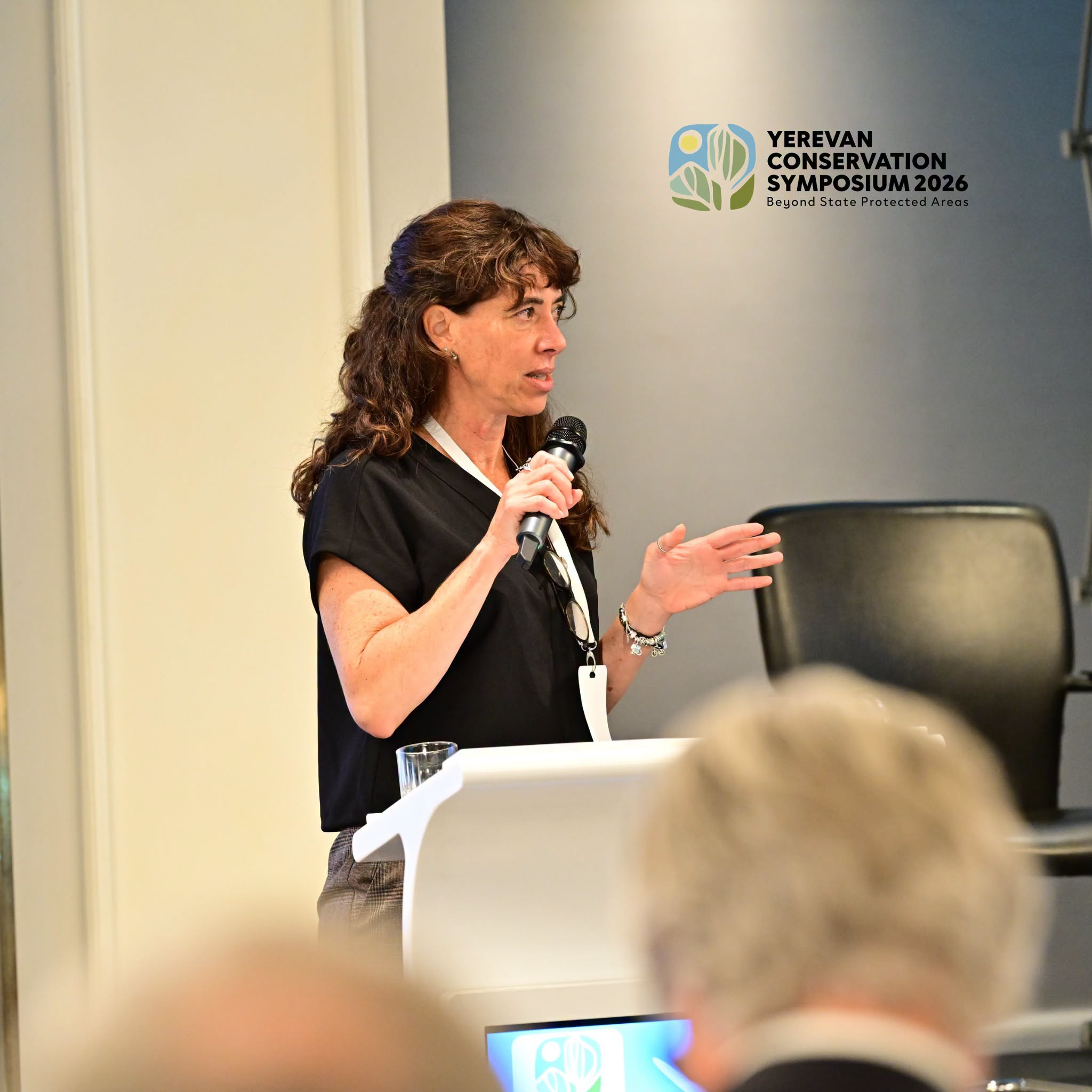
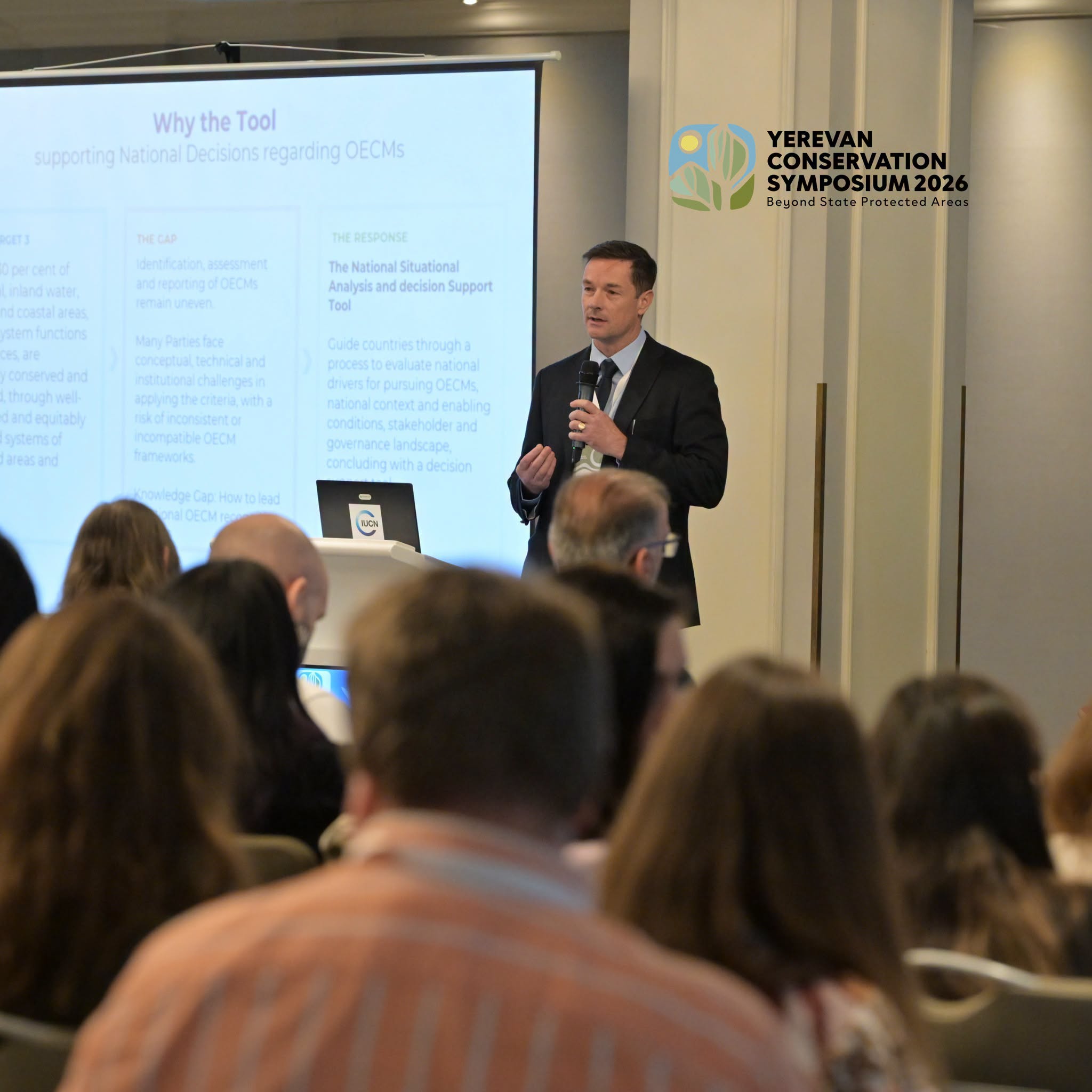
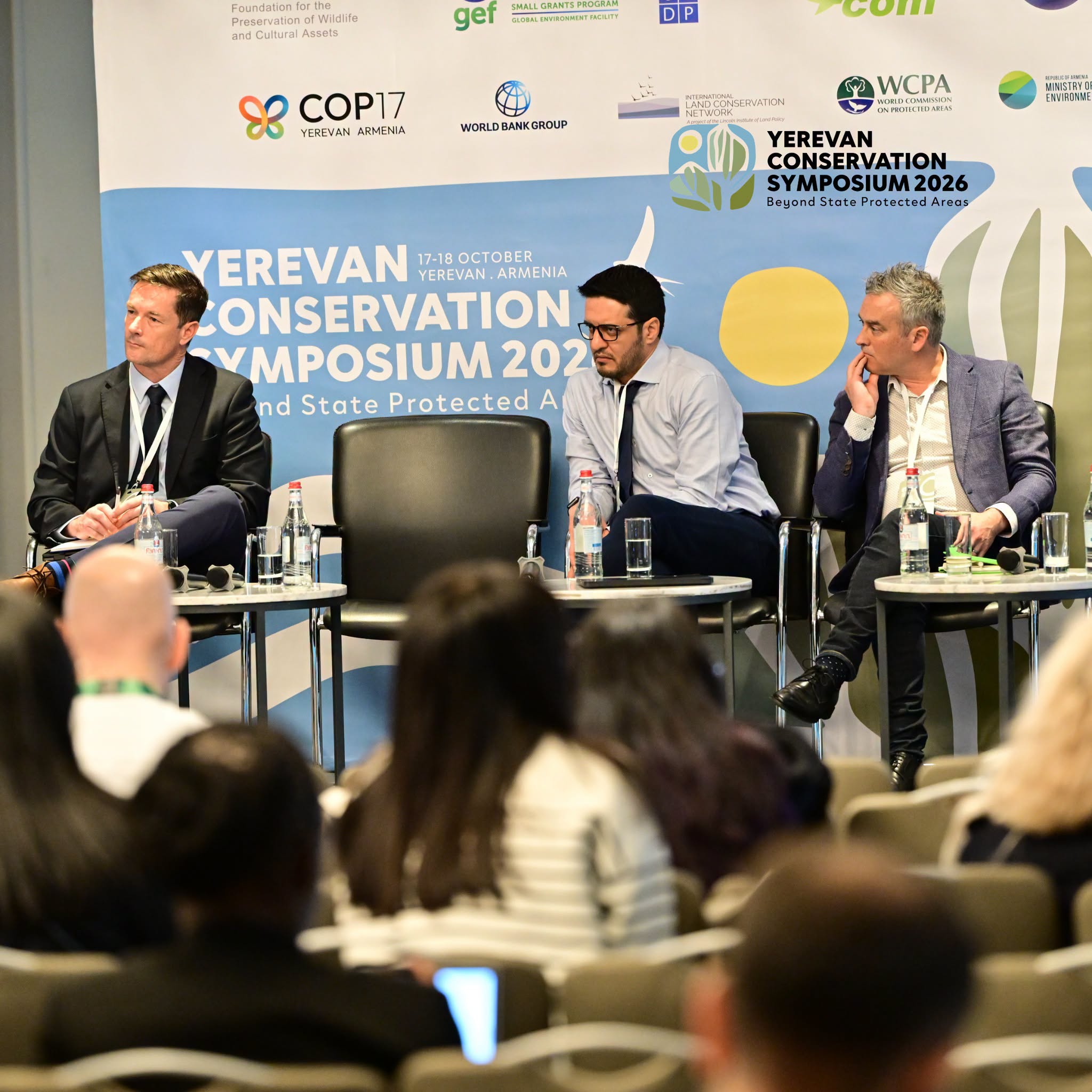
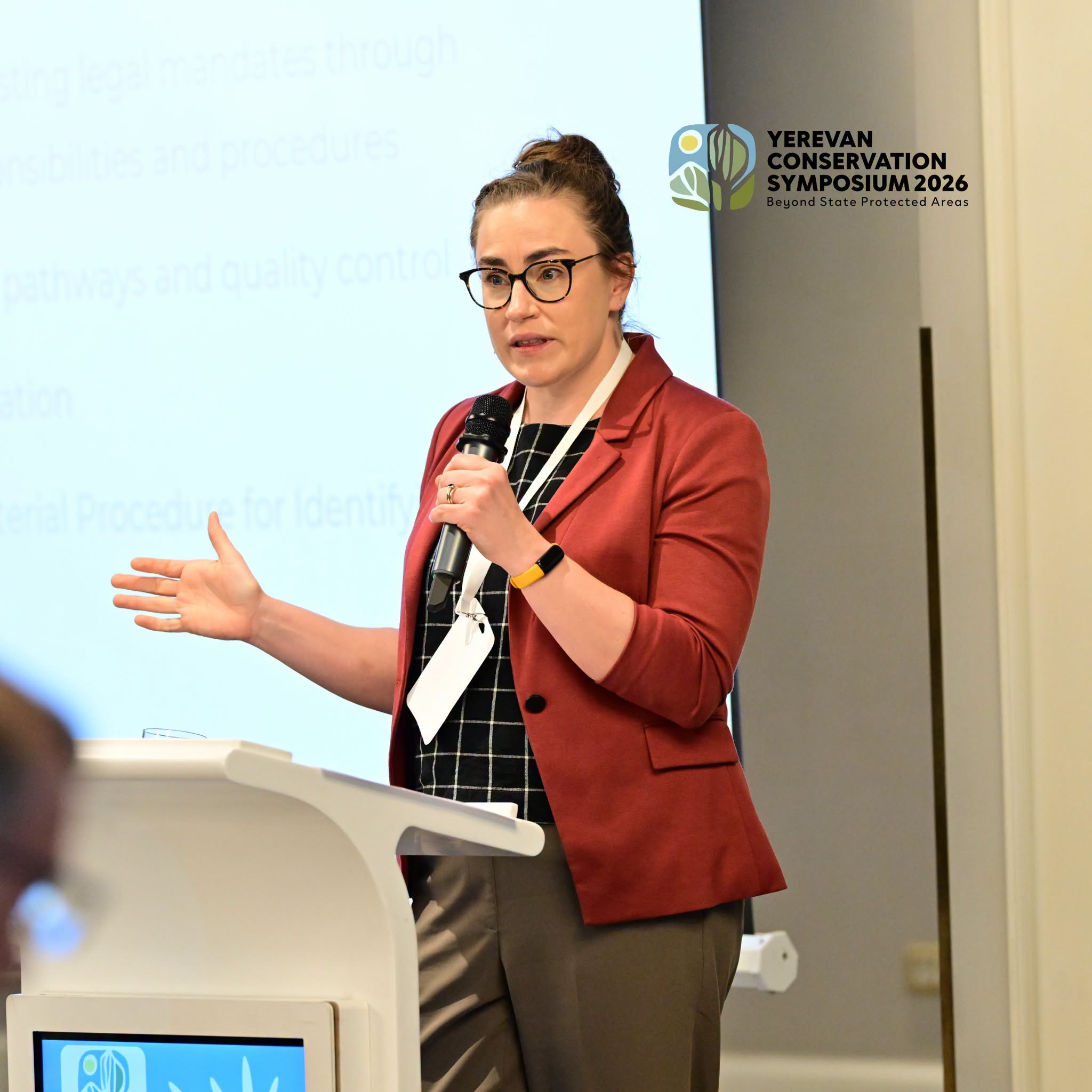
One of the Day 1 information sessions of the "Yerevan Conservation Symposium 2026" (YCS 2026) was dedicated to the legal, policy, and institutional frameworks that serve as key enablers for advancing diverse conservation governance. Moderated by Carolina Hazin of the International Union for Conservation of Nature World Commission on Protected Areas (IUCN WCPA) and The Nature Conservancy, the discussion brought together international experts and government representatives to analyze practical pathways for institutionalizing non-state conserved areas.
During the session, international experts Daniel Marnewick (IUCN), Megan Lafferty (Nature Conservancy of Canada — NCC), and James Fitzsimons (The Nature Conservancy) elaborated on effectively preparing national dialogues, mechanisms for implementing Other Effective Area-based Conservation Measures (OECMs), and tools for achieving high-quality conservation outcomes. The speakers underscored the role of three interconnected pillars: public policy sets strategic objectives, the legal framework ensures clear protection of rights, and the institutional system guarantees accountability and the long-term continuity of processes.
However, applying these legal and institutional mechanisms can only yield full results when the genuine contributions of local communities and Indigenous Peoples are taken into account. In this context, Bernardo Issa de Souza from Brazil's Ministry of Environment and Ali Razmkhah of the ICCA Consortium stressed that delivering Target 3 (30x30) of the Kunming-Montreal Global Biodiversity Framework is impossible without the full legal recognition of the centuries-old experience of Indigenous Peoples and local communities, their traditional territories (Territories of Life), and diverse governance models.
Session participants reaffirmed that only by combining strong legal foundations, effective institutional mechanisms, and unconditional respect for community rights is it possible to achieve sustainable, inclusive, and equitable conservation outcomes on a global scale.